How to Build a High-Converting D2C Landing Page
 Brandora Team
A D2C landing page is the single highest-leverage asset in your marketing stack. Every dollar you spend on ads, every organic visitor you attract, every email click — they all converge on your landing page. A page that converts at 5 percent instead of 2.5 percent effectively cuts your customer acquisition cost in half without changing anything about your advertising. Yet most D2C brands spend 10 times more on driving traffic than on optimizing where that traffic lands.
The average D2C landing page converts at 2.8 percent. The top 10 percent of D2C landing pages convert at 5.8 to 8.2 percent. That gap — 2x to 3x performance — is not explained by product quality or brand awareness. It is explained by specific page elements, layout decisions, copy frameworks, and technical performance factors that are entirely within your control. This guide covers each of them with data and tactical detail.
Landing Page vs. Product Page: When to Use Each
Before optimizing, you need to know when to send traffic to a dedicated landing page versus your standard product page.
Use a dedicated landing page when:
- You are running paid ads to a single product or offer and want maximum conversion focus.
- You are promoting a specific bundle, subscription, or limited-time offer that needs its own narrative.
- You are targeting a specific audience segment with tailored messaging (e.g., a landing page for new moms vs. a landing page for fitness enthusiasts, both selling the same protein powder).
- Your standard product page has a navigation bar, footer links, and other exit points that distract from the purchase action.
Use your product page when:
- Traffic comes from Google Shopping, where users expect a standard ecommerce product page experience.
- You sell a catalog of products and cannot create individual landing pages for each.
- Your product page already converts above 4 percent — in this case, the marginal gain from a dedicated landing page may not justify the maintenance overhead.
Data point: dedicated landing pages outperform standard product pages by 30 to 65 percent in conversion rate for paid social traffic. For Google Shopping traffic, the difference is only 5 to 15 percent because users from Shopping already have high purchase intent and expect a product page experience.
The 12 Elements of a High-Converting D2C Landing Page

Element 1: Page Load Speed (Target: Under 2.5 Seconds)
Page speed is the foundation. Nothing else matters if your page does not load fast enough. Google's research shows that 53 percent of mobile users abandon a page that takes longer than 3 seconds to load. For D2C brands, each additional second of load time reduces conversion by approximately 7 percent.
Current benchmarks: the median D2C landing page loads in 3.8 seconds on mobile. The top 10 percent load in under 2.0 seconds. The gap between 3.8 seconds and 2.0 seconds represents roughly a 12 to 15 percent conversion rate difference — before any design or copy optimization.
Technical optimizations that make the biggest impact:
- Image compression: Convert images to WebP format and compress to under 200KB each. A single unoptimized hero image can add 2 to 3 seconds to load time.
- Lazy loading: Only load images and videos as the user scrolls to them. This reduces initial load by 40 to 60 percent on content-heavy pages.
- Minimize JavaScript: Remove or defer non-essential scripts. Every third-party tracking pixel, chat widget, and analytics tool adds load time. Audit your scripts and remove anything that is not directly contributing to conversion.
- Use a CDN: A content delivery network serves your page from servers geographically close to the user, reducing latency by 40 to 70 percent for distant visitors.
Element 2: Above-the-Fold Hero Section
The above-the-fold section — what the user sees before scrolling — determines whether they stay or bounce. You have approximately 2.6 seconds to communicate enough value that the visitor decides to keep reading. The hero section must contain four elements:
- Benefit-driven headline: Not what the product is, but what it does for the customer. "Clear Skin in 14 Days — Guaranteed" outperforms "Premium Organic Facial Serum" by 35 to 50 percent in on-page engagement. The headline should address the customer's primary desire or pain point.
- Supporting subheadline: One sentence that adds specificity to the headline. Include a proof point: a statistic, a timeframe, or a social proof element. "Join 47,000+ women who have transformed their skincare routine" adds credibility without cluttering the headline.
- Hero image or video: Show the product in use, not just the product in isolation. Lifestyle hero images that show a person using the product convert 22 to 30 percent better than product-only hero shots. For video heroes, keep the video under 30 seconds and ensure it autoplays silently with captions.
- Primary CTA button: Above the fold, always visible. The button text should be specific: "Get Clear Skin Now" outperforms generic "Shop Now" by 14 percent and "Buy Now" by 21 percent in conversion rate testing. Use a contrasting color that stands out from the page background.
Element 3: Social Proof Bar
Immediately below the hero section, include a social proof bar that establishes credibility. This is the single most impactful trust-building element on a D2C landing page. Pages with a social proof bar convert 18 to 27 percent higher than pages without one.
Effective social proof elements:
- Review aggregate: "4.8/5 stars from 2,347 reviews" with star visuals.
- Customer count: "Trusted by 50,000+ customers" or "100,000+ units sold."
- Press logos: "As seen in Vogue, Forbes, Well+Good" with publication logos.
- Awards or certifications: "Best of Beauty 2025" or "Dermatologist Recommended."
The key is specificity. "Thousands of happy customers" is weak. "47,382 five-star reviews" is strong. Numbers create credibility; vague claims create skepticism.
Element 4: Problem-Solution Narrative
After the hero and social proof, build the case for why the visitor needs your product. The most effective framework is Problem-Agitate-Solution (PAS):
- Problem: Name the specific problem your target customer faces. Be precise: "You have tried 5 different moisturizers and your skin is still dry by noon" is more effective than "Dry skin is a common problem."
- Agitate: Describe the consequences of not solving the problem. What does the customer miss out on? How does the problem affect their daily life? This creates emotional motivation to find a solution.
- Solution: Introduce your product as the solution. Explain the mechanism — why does your product solve this problem when others have not? This is where ingredient science, technology differentiators, or unique formulations come in.
Pages using a PAS framework convert 20 to 35 percent higher than pages that jump straight to product features. The emotional journey from problem recognition to solution discovery creates psychological momentum toward purchase.
Element 5: Benefit-Focused Feature Section
Customers do not buy features — they buy outcomes. Translate every product feature into a customer benefit:
| Feature (Weak) | Benefit (Strong) | Conversion Impact |
|---|---|---|
| Contains hyaluronic acid | Skin stays hydrated for 24 hours | +18% engagement |
| Made with organic ingredients | Safe for sensitive skin — zero irritation | +22% engagement |
| 30-day supply per bottle | One bottle, one month, visibly clearer skin | +15% engagement |
| Free shipping | Delivered free to your door in 2-3 days | +12% engagement |
Present 3 to 5 benefits maximum. More than 5 dilutes focus and causes decision paralysis. Use icons or simple visuals alongside each benefit for faster scanning — 79 percent of web users scan rather than read.
Element 6: Customer Testimonials and Reviews
Testimonials are the most powerful conversion element after the hero section and CTA. Include 3 to 5 testimonials that meet these criteria:
- Specific results: "My dark spots faded in 3 weeks" is 4 times more persuasive than "Great product, love it."
- Relatable customer profile: Include the reviewer's first name, age, and location. "Sarah, 34, Austin TX" creates relatability that "Verified Buyer" does not.
- Objection-addressing: Choose testimonials that address common purchase objections. If price is a concern, include a review saying "I was skeptical about the price but it is worth every penny." If efficacy is a concern, include reviews with specific before-and-after timelines.
- Visual testimonials: Video testimonials convert 25 to 40 percent better than text-only testimonials. Even a photo of the reviewer increases conversion by 15 percent compared to text alone.
Element 7: Risk Reversal (Guarantee)
A guarantee reduces the perceived risk of purchasing from an unfamiliar brand. The data shows that pages with a prominently displayed guarantee convert 12 to 18 percent higher than pages without one. Importantly, generous guarantees do not significantly increase return rates — brands offering a 60-day money-back guarantee see only 2 to 4 percent more returns than brands offering 30-day guarantees, but the conversion lift more than compensates.
Effective guarantee formulations for D2C:
- "60-day money-back guarantee. No questions asked."
- "Try it risk-free for 30 days. If you are not 100 percent satisfied, we will refund every penny."
- "Love it or we will buy it back." (A stronger version that implies even more confidence.)
Element 8: Urgency and Scarcity (When Authentic)
Genuine urgency increases conversion by 10 to 30 percent. Fake urgency (countdown timers that reset, "only 3 left" on unlimited digital goods) damages trust and increases bounce rates by 15 to 20 percent when detected by savvy consumers.
Authentic urgency examples that work:
- Limited-edition product with genuine limited inventory.
- Sale or promotion with a real end date.
- Subscription with a discounted first-order offer that expires.
- Free shipping threshold with seasonal timing ("Free holiday shipping ends Friday").
Element 9: Sticky Add-to-Cart Bar
A sticky bar that follows the user as they scroll — showing the product name, price, and an "Add to Cart" button — increases conversion by 8 to 15 percent. It eliminates the need for the visitor to scroll back up to find the purchase button after reading through your page content.
Element 10: FAQ Section
An FAQ section on your landing page addresses objections that the main page copy missed. Pages with an FAQ section show 10 to 15 percent lower bounce rates and 8 to 12 percent higher conversion rates compared to pages without one. Include 5 to 8 questions that address the most common pre-purchase concerns: shipping times, return policy, ingredients or materials, sizing, and how-to-use instructions.
Element 11: Mobile Optimization
In 2026, 74 percent of D2C purchases happen on mobile devices. Yet most landing pages are designed on desktop first and adapted to mobile as an afterthought. Design for mobile first:
- Single-column layout: No multi-column grids on mobile. One column, sequential scroll.
- Thumb-friendly CTAs: Buttons should be at least 48px tall and 280px wide, easily tappable with one thumb.
- Readable text without zooming: Minimum 16px body text, 24px headings on mobile.
- Minimized form fields: Every additional field reduces mobile conversion by 7 to 10 percent. Use autofill, address lookup, and one-click payment options wherever possible.
Element 12: Exit-Intent Offer
Exit-intent popups — triggered when the user's cursor moves toward the browser's close button (desktop) or after a period of inactivity (mobile) — recover 3 to 8 percent of abandoning visitors. The most effective exit-intent offers for D2C are a 10 to 15 percent discount for first-time buyers, a free shipping offer, or a free gift with purchase. The popup should be simple: one headline, one incentive, one email capture field, and one CTA button.
The Landing Page Testing Framework
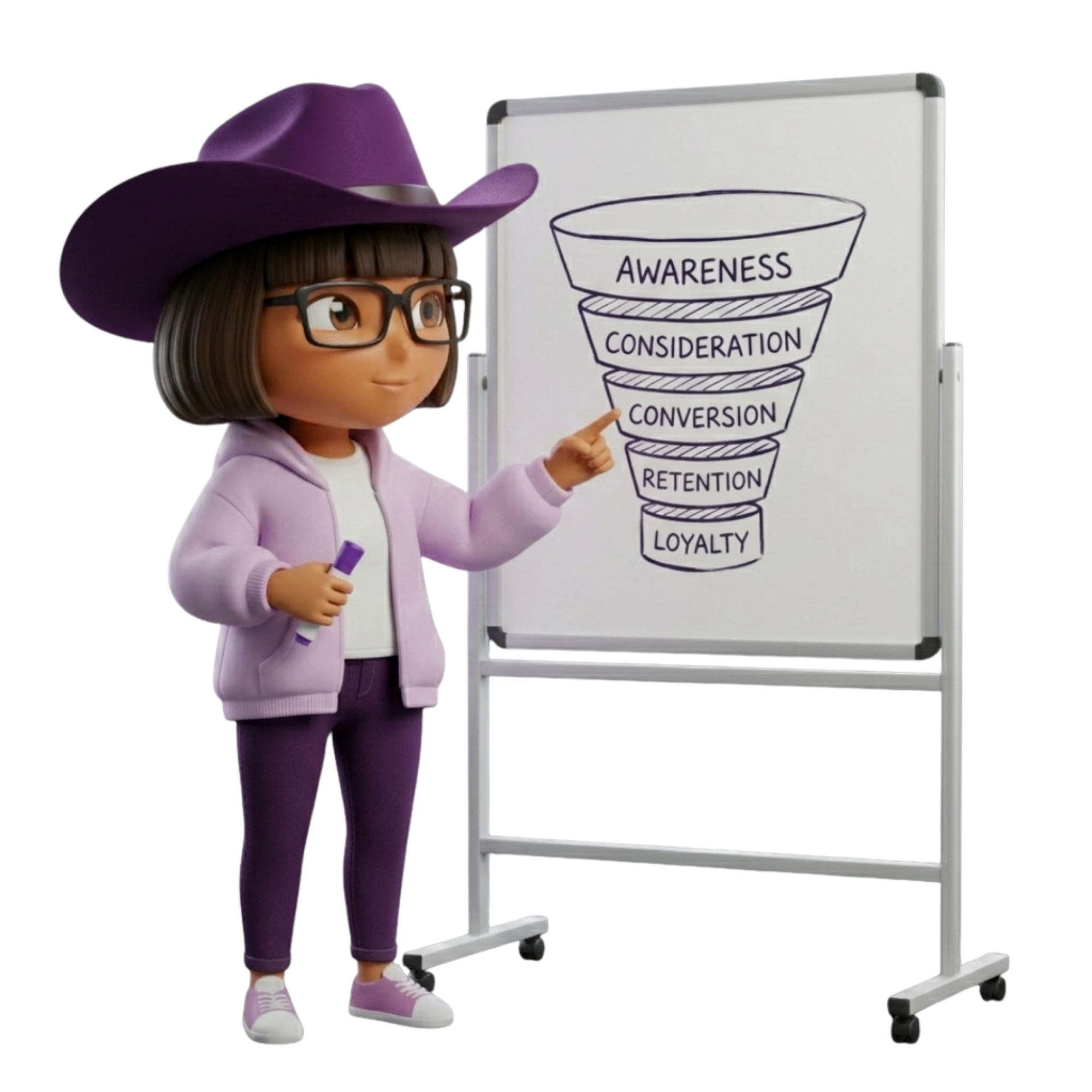
Building the page is step one. Optimizing it through testing is where the real gains happen. Here is a prioritized testing framework for D2C landing pages, ranked by typical conversion impact:
- Headline (highest impact): Test 3 to 5 headline variations. Focus on different benefit angles and levels of specificity. Average conversion impact of a winning headline: 15 to 30 percent improvement.
- Hero image or video: Test lifestyle vs. product-only, different models, different settings. Average impact: 10 to 25 percent.
- CTA button text and color: Test specific benefit CTAs vs. generic. Test contrasting colors. Average impact: 8 to 15 percent.
- Social proof placement and format: Test above-the-fold vs. below hero. Test video testimonials vs. text. Average impact: 8 to 18 percent.
- Price presentation: Test price anchoring (show original price crossed out), bundle pricing, and per-day cost framing. Average impact: 5 to 15 percent.
- Page length: Test long-form (2,000+ words) vs. short-form (500 words). Long-form typically wins for products above $50 and for cold traffic. Short-form wins for products under $30 and for retargeting traffic. Average impact: 10 to 20 percent.
Run each test until you reach statistical significance — at least 200 conversions per variation (100 per variant in an A/B test). At a 3 percent conversion rate, this requires roughly 3,300 visitors per variant. Ending tests too early leads to false positives and wasted optimization effort.
Tools for Building D2C Landing Pages
The choice of landing page tool depends on your technical capability and testing volume:
- Shopify native pages: Free (included with Shopify). Limited customization but sufficient for basic landing pages. Best for brands spending under $5,000 per month on ads.
- Shogun or GemPages (Shopify apps): $39 to $149 per month. Drag-and-drop builders with more design flexibility and built-in A/B testing. Best for brands spending $5,000 to $50,000 per month.
- Unbounce or Instapage: $90 to $200 per month. Dedicated landing page platforms with advanced A/B testing, dynamic text replacement, and AI-powered optimization. Best for brands spending $50,000+ per month with dedicated CRO resources.
- Custom-built (Hydrogen, Next.js, etc.): Higher development cost but maximum performance and customization. Best for brands with engineering resources and complex product configurations.
Regardless of the tool, the principles remain the same. Speed, clarity, social proof, and a frictionless path to purchase are what drive conversion — not fancy animations or complex layouts.
Platforms like Brandora combine AI-powered creative generation with performance marketing expertise, helping D2C brands create and test landing page creative elements at the velocity needed to find winning combinations quickly.
Frequently Asked Questions
What is a good conversion rate for a D2C landing page?
The median D2C landing page converts at 2.8 percent. A "good" conversion rate is 4 to 5 percent, putting you in the top 25 percent of D2C pages. An "excellent" rate is 6 to 8 percent, placing you in the top 10 percent. These benchmarks vary by traffic source: paid social traffic converts at 2 to 4 percent, Google Shopping at 3 to 5 percent, email traffic at 5 to 8 percent, and direct or branded search at 6 to 10 percent. Always compare your performance against the benchmark for your specific traffic source.
Should I use a long landing page or a short one?
For products priced above $50, long-form pages (1,500 to 2,500 words equivalent) outperform short pages by 20 to 40 percent because higher-priced products require more persuasion and objection handling. For products under $30, short pages (500 to 800 words) often perform equally well or better because the low price reduces decision complexity. For cold traffic from paid social, long-form consistently wins across price points because the visitor needs education about your brand and product. For retargeting traffic, short-form with a strong offer often wins because the visitor already knows your product.
How many CTAs should a landing page have?
One primary action, repeated 3 to 4 times throughout the page. Every CTA button should drive the same action (add to cart or buy now). Having multiple different CTAs ("Learn More," "Watch Video," "Read Reviews," "Buy Now") dilutes focus and reduces conversion by 10 to 20 percent compared to a single repeated CTA. Place the first CTA above the fold, then repeat after each major content section (after social proof, after benefits, after testimonials, and at the bottom of the page).
Do product videos on landing pages increase conversion?
Yes, but only when done right. Landing pages with a product video see 15 to 25 percent higher conversion rates on average. However, autoplay videos with sound decrease conversion by 8 to 12 percent because they are disruptive. The optimal setup: a video that autoplays silently with captions, placed just below the hero section. Keep the video under 60 seconds. The most effective video format for D2C landing pages is a customer testimonial or a product demonstration showing results, not a brand sizzle reel. Videos longer than 90 seconds show diminishing returns on conversion impact.
How do I reduce landing page bounce rate?
The average D2C landing page bounce rate from paid social is 55 to 65 percent. To reduce it below 45 percent (top quartile), focus on three factors. First, message match — the landing page headline must directly reflect the ad that drove the click. If your ad says "Clear skin in 14 days," the landing page headline should reinforce that same promise. Mismatched messaging increases bounce rate by 25 to 40 percent. Second, page speed — every second of load time above 2.5 seconds increases bounce rate by 8 to 10 percent. Third, above-the-fold content quality — the first screen must immediately communicate what the product is, why it matters, and what the visitor should do next. If your above-the-fold section lacks a clear benefit headline or strong visual, 30 to 40 percent of visitors will bounce before scrolling.
Ready to grow your D2C brand?
Talk to our team — AI-powered creative production plus human performance marketing expertise.
Talk to Us