The Speed Advantage: How AI Plus Human Teams Ship Marketing 5x Faster
 Brandora Team
Speed in marketing is not about rushing. It is about the time between having an idea and getting it in front of your audience. The brands that can move from concept to live campaign in hours instead of weeks have a massive competitive advantage — they can react to trends, test more hypotheses, iterate faster on what works, and outmaneuver slower competitors at every turn.
The question is not whether AI makes marketing faster. Obviously it does. The real question is: does faster also mean worse? Does speed come at the cost of quality, brand consistency, or strategic coherence?
The answer, when you structure the AI plus human workflow correctly, is no. AI plus human teams ship marketing 5 times faster than human-only teams — and the quality is equal or better. Not despite the speed, but because of it. When AI handles the production grind, humans spend their time where it actually matters: creative thinking, strategic direction, and quality refinement. The result is more output, higher quality, and a team that is not burned out from trying to keep up with impossible content demands.
This article breaks down the specific time savings across every major marketing function, with real numbers from real workflows. We will also show you why faster production actually improves quality rather than degrading it.
The Marketing Speed Equation
Every marketing task has two components: production time and thinking time.
Production time is the hours spent executing — resizing images, formatting copy for different platforms, pulling data into spreadsheets, setting up campaign structures, writing variations of the same message. This work requires attention and skill, but it does not require strategic judgment. It is necessary but not differentiating.
Thinking time is the hours spent on creative ideation, strategic planning, audience insight development, competitive analysis, and decision-making. This is the work that actually determines whether your marketing succeeds or fails. It is the work humans are uniquely equipped to do.
In a human-only workflow, production time typically consumes 65 to 80 percent of a marketer's day. That leaves just 20 to 35 percent for the thinking work that drives results. The marketer spends most of their day on tasks that do not leverage their unique abilities.
In an AI plus human workflow, AI absorbs 80 to 90 percent of production time. The human's day flips: 70 to 80 percent thinking time, 20 to 30 percent review and refinement. The total output increases dramatically because AI produces faster than humans. But the quality also improves because humans finally have time to think deeply about strategy and creative direction instead of rushing through production tasks.
Task-by-Task Time Comparison

Let us break down the specific time savings for the most common marketing tasks. These numbers are based on tracked workflows across dozens of D2C brands ranging from $500,000 to $20 million in annual revenue.
Ad Creative Production
Human-only: A designer creates 5 to 8 ad creatives per day, including concept development, design, copywriting, and formatting for multiple placements (feed, story, reel). A week of ad creative production yields 25 to 40 creatives.
AI plus human: A human creative director spends 1 to 2 hours developing creative briefs and defining angles. AI generates 40 to 60 variations across formats in 2 to 3 hours. The human reviews, selects the top 20 to 30, and makes refinements in 1 to 2 hours. Total time: 4 to 7 hours for a week's worth of creative. Output: 20 to 30 refined, human-approved creatives versus 25 to 40 from the human-only workflow — but produced in one-fifth of the time.
Time savings: 75 to 80 percent
Social Media Content Creation
Human-only: A social media manager spends 8 to 12 hours per week creating content — ideating topics, writing captions, selecting and editing images, scheduling posts, and creating stories or reels. For a 5-post-per-week schedule, that is roughly 2 hours per post including all supporting work.
AI plus human: The human defines the weekly content themes and tone in 30 to 45 minutes. AI generates 15 to 20 caption options, suggests relevant hashtags, and creates image concepts. The human selects, edits, and personalizes the best options in 1 to 2 hours. Total time: 2 to 3 hours per week versus 8 to 12 hours.
Time savings: 70 to 75 percent
Email Copywriting
Human-only: Writing a single email — including subject line, preview text, body copy, and CTA — takes a skilled copywriter 2 to 4 hours. A weekly email and a monthly newsletter consumes 12 to 20 hours per month.
AI plus human: The human defines the email objective, key message, and audience segment in 15 to 20 minutes. AI generates 5 to 8 complete email drafts with multiple subject line options. The human selects the best draft, refines the copy, and ensures brand voice alignment in 30 to 60 minutes. Total time per email: 45 minutes to 1.5 hours versus 2 to 4 hours.
Time savings: 60 to 65 percent
Campaign Setup and Launch
Human-only: Setting up a new Meta campaign from scratch — including campaign structure, audience creation, budget allocation, creative upload, copy input, UTM parameters, and QA — takes 2 to 4 hours for a complex campaign with multiple ad sets.
AI plus human: AI pre-populates campaign structures based on best practices and historical performance. It auto-generates audiences from existing customer data, applies proven exclusions, sets appropriate budgets based on historical pacing, and configures tracking automatically. The human reviews the setup, makes strategic adjustments, and approves launch in 30 to 60 minutes. Total time: 30 to 60 minutes versus 2 to 4 hours.
Time savings: 75 to 85 percent
Performance Reporting
Human-only: Pulling a comprehensive weekly performance report — aggregating data from Meta, Google, Shopify, email, and organic social — takes 4 to 8 hours. This includes data export, formatting, analysis, and insight generation.
AI plus human: AI aggregates data in real-time and generates formatted reports with automated insight detection — trends, anomalies, and performance changes are highlighted automatically. The human spends 30 to 60 minutes reviewing the AI-generated report, adding strategic context, and preparing recommendations for stakeholders. Total time: 30 to 60 minutes versus 4 to 8 hours.
Time savings: 85 to 90 percent
A/B Testing Setup and Analysis
Human-only: Designing an A/B test — defining the hypothesis, creating variations, setting up the test structure, monitoring results, and analyzing outcomes — takes 3 to 6 hours per test cycle. Most human-only teams run 2 to 4 tests per month.
AI plus human: AI generates test variations automatically based on performance data, sets up statistically valid test structures, monitors results in real-time, and flags winners as soon as statistical significance is reached. The human defines the testing hypothesis and makes decisions based on AI-analyzed results. Total time per test: 1 to 2 hours. Teams run 8 to 15 tests per month.
Time savings: 65 to 70 percent (with 3-4x more tests run)
The Complete Time Comparison Table
| Marketing Task | Human-Only (Weekly) | AI + Human (Weekly) | Time Saved | Output Change |
|---|---|---|---|---|
| Ad Creative Production | 25-40 hrs | 4-7 hrs | ~80% | Equal or more creatives |
| Social Media Content | 8-12 hrs | 2-3 hrs | ~75% | Same volume, more variety |
| Email Copywriting | 3-5 hrs | 1-1.5 hrs | ~65% | More variations tested |
| Campaign Setup | 2-4 hrs per campaign | 30-60 min per campaign | ~80% | Fewer setup errors |
| Performance Reporting | 4-8 hrs | 30-60 min | ~90% | Real-time vs. weekly lag |
| A/B Testing | 3-6 hrs per test | 1-2 hrs per test | ~70% | 3-4x more tests per month |
| Total Weekly Hours | 45-75 hrs | 9-15 hrs | ~80% | Higher quality + volume |
The numbers are striking. A marketing workload that requires a team of 3 to 4 people in a human-only workflow can be handled by 1 to 2 people with AI augmentation — not by cutting corners, but by eliminating the production overhead that consumes most of their time.
Why Faster Does Not Mean Worse
The intuitive assumption is that speed trades off against quality. If you produce something in 20 percent of the time, it must be 80 percent worse, right? In traditional production, this is often true. But AI plus human workflows break this assumption for three specific reasons.
Reason 1: AI Eliminates the Quality-Degrading Parts of Production
The parts of marketing production that AI handles are not the parts where quality comes from. Resizing an image from 1080x1080 to 1080x1920 is not a creative act. Reformatting ad copy for 6 different headline character limits is not where the magic happens. Pulling data from 4 platforms into a spreadsheet is not strategic thinking. These tasks are necessary but mechanical. When AI handles them, nothing of value is lost — only time.
Reason 2: Humans Get More Time for What Actually Drives Quality
When a creative director spends 6 hours per day on production tasks, they have 2 hours for creative thinking. When AI handles the production, they have 6 to 7 hours for creative thinking. More thinking time means better concepts, sharper messaging, more nuanced audience understanding, and more creative risk-taking. The quality of the strategic and creative input goes up precisely because the human is not exhausted from production work.
Reason 3: Speed Enables Iteration, and Iteration Drives Quality
The fastest path to great marketing is not perfecting a single piece of content — it is producing many variations, testing them with real audiences, and iterating based on data. A team that tests 15 ad creatives per week learns 3 times faster than a team that tests 5. That learning compounds. Within 8 to 12 weeks, the fast-iterating team has accumulated so much performance data that their creative decisions are informed by real-world evidence rather than gut instinct. Speed creates a learning flywheel that directly improves quality over time.
Case Study: A D2C Skincare Brand's Speed Transformation
A D2C skincare brand with $3 million in annual revenue had a 3-person marketing team: a marketing manager, a designer, and a part-time copywriter. Their weekly output was:
- 5 to 8 new ad creatives
- 4 social media posts
- 1 email campaign
- Weekly performance review (delivered every Tuesday for the prior week)
- 1 to 2 A/B tests per month
The team was perpetually behind. The designer was backlogged by 3 weeks. The copywriter could not keep up with requests. The marketing manager spent most of her time on operational coordination rather than strategy. Creative testing was minimal because they could not produce enough variations. Performance reports were always delayed.
After Implementing AI Plus Human Workflow
The team adopted an AI plus human workflow using Brandora's platform — Creative Dora for visual production, Social Dora for content management, and Ads Dora for campaign optimization. After a 4-week transition period, their weekly output was:
- 25 to 35 new ad creatives (AI-generated, human-reviewed)
- 10 to 12 social media posts (AI-drafted, human-refined)
- 2 to 3 email campaigns with 3 to 5 subject line variations each
- Real-time performance dashboards replacing the weekly report
- 6 to 8 A/B tests per month
The marketing manager now spent 60 percent of her time on strategy and creative direction instead of coordination. The designer focused on high-concept brand work and campaign themes rather than resizing assets. The copywriter focused on brand voice development and key messaging rather than churning out variations.
Within 90 days, the brand saw the following results:
- Cost per acquisition decreased 28 percent due to higher creative testing volume
- Social media engagement increased 42 percent due to more frequent, higher-variety posting
- Email revenue increased 35 percent due to more campaigns and more subject line testing
- The team reported higher job satisfaction because they were doing more meaningful work
Case Study: A Fashion Brand's Product Launch Sprint
A fashion brand was launching a new collection — 24 products, each needing product photography, ad creatives, social content, email announcements, and landing page copy. Under their human-only workflow, a launch of this scale typically took 6 to 8 weeks from product finalization to full marketing deployment.
The AI Plus Human Approach
Using AI-powered production, the timeline compressed dramatically:
- Week 1: Human creative director defined the collection narrative, visual mood, and key messaging angles. AI generated product imagery in 12 different lifestyle settings from base product photos. Human reviewed and selected the top 3 to 4 settings per product.
- Week 2: AI generated 150+ ad creative variations across the 24 products. Human team selected and refined 60 launch creatives. AI drafted email sequences, social captions, and landing page copy. Human copywriter refined all text for brand voice and accuracy.
- Launch day (Day 15): All campaigns live. Every product had dedicated creatives, every channel had coordinated messaging, and A/B tests were already running.
What previously took 6 to 8 weeks was completed in 15 days — without additional hires, overtime, or quality shortcuts. The human team worked normal hours because AI handled the production volume. The creative quality was actually higher than previous launches because the creative director had more time to think about the overall narrative and less time resizing assets.
Case Study: An Emerging Beverage Brand's Trend Response
Speed is not just about planned content — it is about reactive marketing. When a trending moment aligns with your brand, the window to capitalize is 24 to 48 hours. After that, the trend is saturated and your content feels late.
An emerging beverage brand noticed a viral fitness trend on TikTok that perfectly aligned with their product positioning. Under a human-only workflow, creating trend-responsive content would take 3 to 5 days: brainstorm session, brief the designer, wait for concepts, review rounds, copywriting, approval, scheduling. By then, the trend would be over.
The AI Plus Human Response
The marketing manager identified the trend at 9 AM. By 11 AM, AI had generated 8 social media post variations and 6 ad creative concepts riffing on the trend. By noon, the human team had selected 3 social posts and 4 ad creatives, refined the copy for brand voice and tone-appropriateness, and launched everything. By 2 PM, the content was live — while the trend was still peaking.
The result: the brand's trend-responsive posts generated 12 times their normal engagement rate and drove a measurable spike in website traffic and sales. The entire effort took about 5 hours of combined AI and human time. A human-only team would have missed the window entirely.
The Compounding Effect of Speed
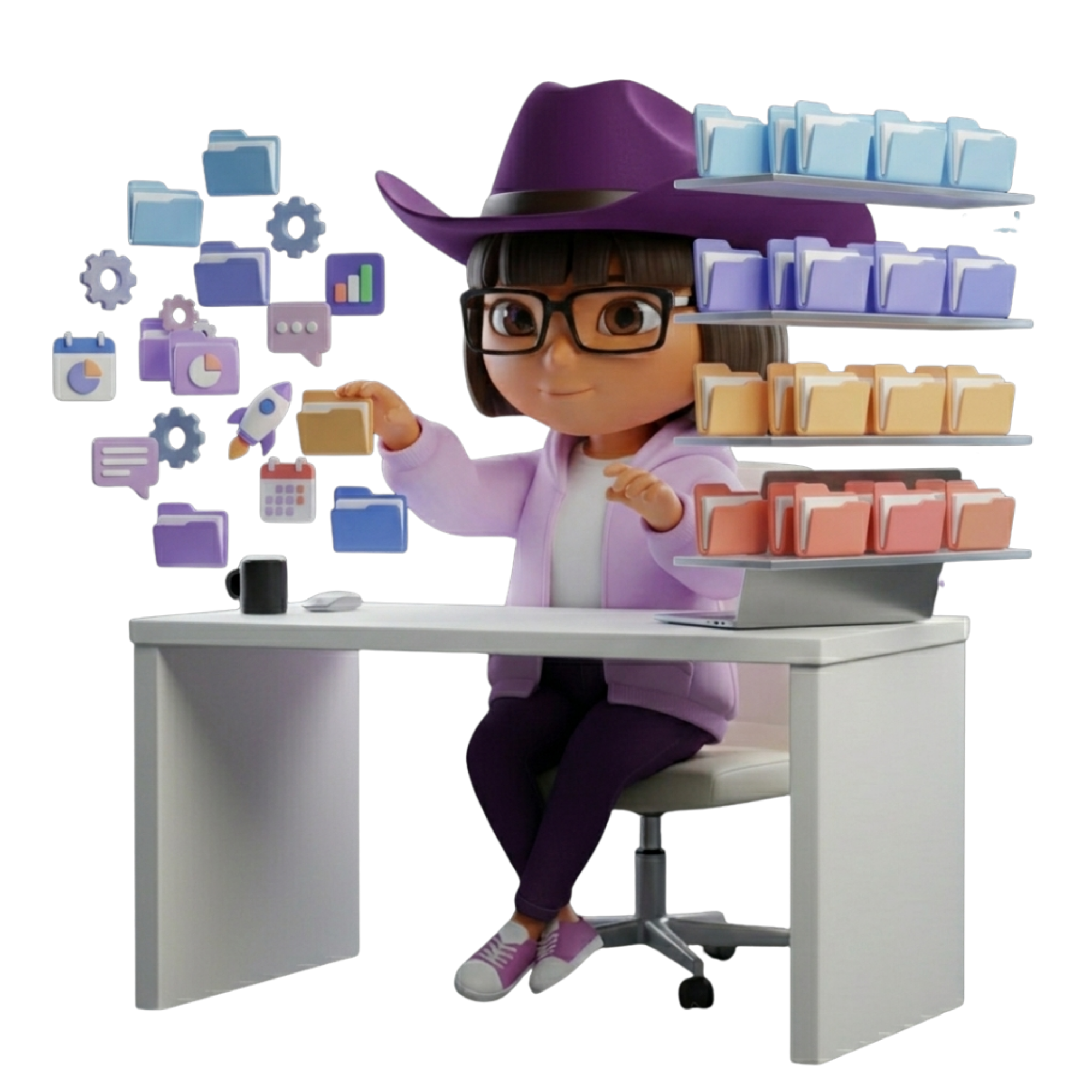
Speed advantages compound over time in ways that are not immediately obvious.
Learning Velocity
A team that runs 8 A/B tests per month learns 4 times faster than a team that runs 2. After 6 months, the fast team has run 48 tests and accumulated 48 data points about what works and what does not. The slow team has 12 data points. The fast team's creative decisions are dramatically more informed, which means their performance improves at an accelerating rate.
Creative Freshness
Ad platforms reward creative freshness. Algorithms give new creatives higher reach in the first 48 to 72 hours. A team that launches 25 new creatives per week is constantly feeding the algorithm fresh content, maintaining lower CPMs and higher reach. A team launching 5 creatives per week cannot maintain this freshness advantage.
Competitive Responsiveness
When a competitor launches a promotion or a market shift occurs, the AI-augmented team can respond within hours with updated messaging, new creatives, and adjusted campaigns. The human-only team responds in days or weeks. Over time, this responsiveness gap translates into meaningful market share differences.
Team Retention and Satisfaction
Marketers who spend their days on production tasks — resizing images, pulling reports, copying and pasting between platforms — burn out. Marketers who spend their days on strategy and creative work thrive. AI augmentation does not just save time — it transforms the nature of the work, making it more engaging and fulfilling. This leads to lower turnover, which preserves institutional knowledge and reduces hiring and training costs.
How to Capture the Speed Advantage
Implementing the AI plus human speed advantage requires more than just buying AI tools. It requires restructuring workflows to ensure humans and AI are each doing what they do best.
Step 1: Audit Your Current Time Allocation
Track how your marketing team spends their time for two weeks. Categorize every task as production work or thinking work. Most teams are shocked to discover that 65 to 80 percent of their time goes to production.
Step 2: Identify the Highest-Impact Automations
Not all production tasks are equally valuable to automate. Start with the tasks that consume the most time and have the most straightforward AI solutions: ad creative resizing, performance reporting, social media caption drafting, and campaign setup. These deliver the fastest ROI with the lowest implementation risk.
Step 3: Redesign Your Workflows
Do not just add AI to your existing workflow — redesign the workflow around the AI plus human model. Define clear handoff points: where does AI produce, where does the human review, and where does AI execute? Map the entire process from brief to launch with specific AI and human responsibilities at each stage.
Step 4: Invest Human Time in Strategic Upskilling
As AI absorbs production work, your team needs to upskill in the areas that matter more: creative strategy, data interpretation, brand development, and audience psychology. The time saved by AI should be deliberately reinvested in skills that compound over time, not absorbed by more meetings or administrative tasks.
Step 5: Measure and Iterate
Track the metrics that matter: time to market for new campaigns, number of creative tests per month, time spent on production versus strategy, and the downstream performance metrics that result from faster execution. Use this data to continuously refine your AI plus human workflow.
Brandora is built to power this exact transformation. Creative Dora, Social Dora, and Ads Dora handle the production and execution layer, while Brandora's human performance marketing experts ensure that speed never comes at the cost of quality, brand integrity, or strategic coherence. It is the AI plus human model in practice — and it is how the fastest-growing D2C brands are operating today.
Frequently Asked Questions
Does AI plus human marketing actually produce results 5x faster?
Yes, across most marketing production tasks. The exact multiplier varies by task: ad creative production sees approximately 4 to 5 times speed improvement, social media content is 3 to 4 times faster, performance reporting is 8 to 10 times faster, and campaign setup is 3 to 5 times faster. The overall blended average across all common marketing tasks is approximately 5 times faster when measured by total hours required to produce the same or greater output volume.
Does faster production mean lower quality content?
No — and this is the most common misconception. AI plus human workflows are faster because AI handles the mechanical production work (resizing, reformatting, data aggregation, variation generation) while humans focus entirely on the creative and strategic work that determines quality. The human input per piece of content is actually higher quality because the human is not fatigued from production work. Multiple studies and real-world case studies show that AI plus human output meets or exceeds the quality of human-only output.
How long does it take to transition to an AI plus human marketing workflow?
Most teams achieve meaningful speed improvements within 2 to 4 weeks of implementation. The first week is setup and training. By week 2, the team is typically producing 2 to 3 times faster. By week 4, the full 5 times speed advantage is typically realized as the team becomes fluent with the new workflow. Full optimization — including workflow redesign and team upskilling — takes 2 to 3 months.
What marketing tasks benefit most from AI speed augmentation?
The tasks with the highest speed improvement are those that involve high volume, repetitive production, and data processing: ad creative variation and resizing (80 percent time savings), performance reporting and analytics (85 to 90 percent time savings), campaign setup and configuration (75 to 85 percent time savings), and social media content drafting (70 to 75 percent time savings). Tasks that require deep strategic thinking — like brand positioning, campaign conceptualization, and stakeholder communication — benefit less from AI speed augmentation because they are inherently human-driven.
Can Brandora help my team achieve the 5x speed advantage?
Yes. Brandora's platform is designed specifically for the AI plus human speed model. Creative Dora handles ad creative and visual content production at AI speed. Social Dora manages social media content generation and scheduling. Ads Dora handles campaign setup, optimization, and real-time monitoring. And Brandora's human performance marketing experts provide the strategic layer — creative direction, quality review, and campaign strategy — that ensures speed never compromises results. Most Brandora clients see the full speed advantage within 30 days of onboarding.
Experience the AI + Human advantage
Brandora combines AI-powered production with human strategic expertise. See the difference for yourself.
Talk to Us